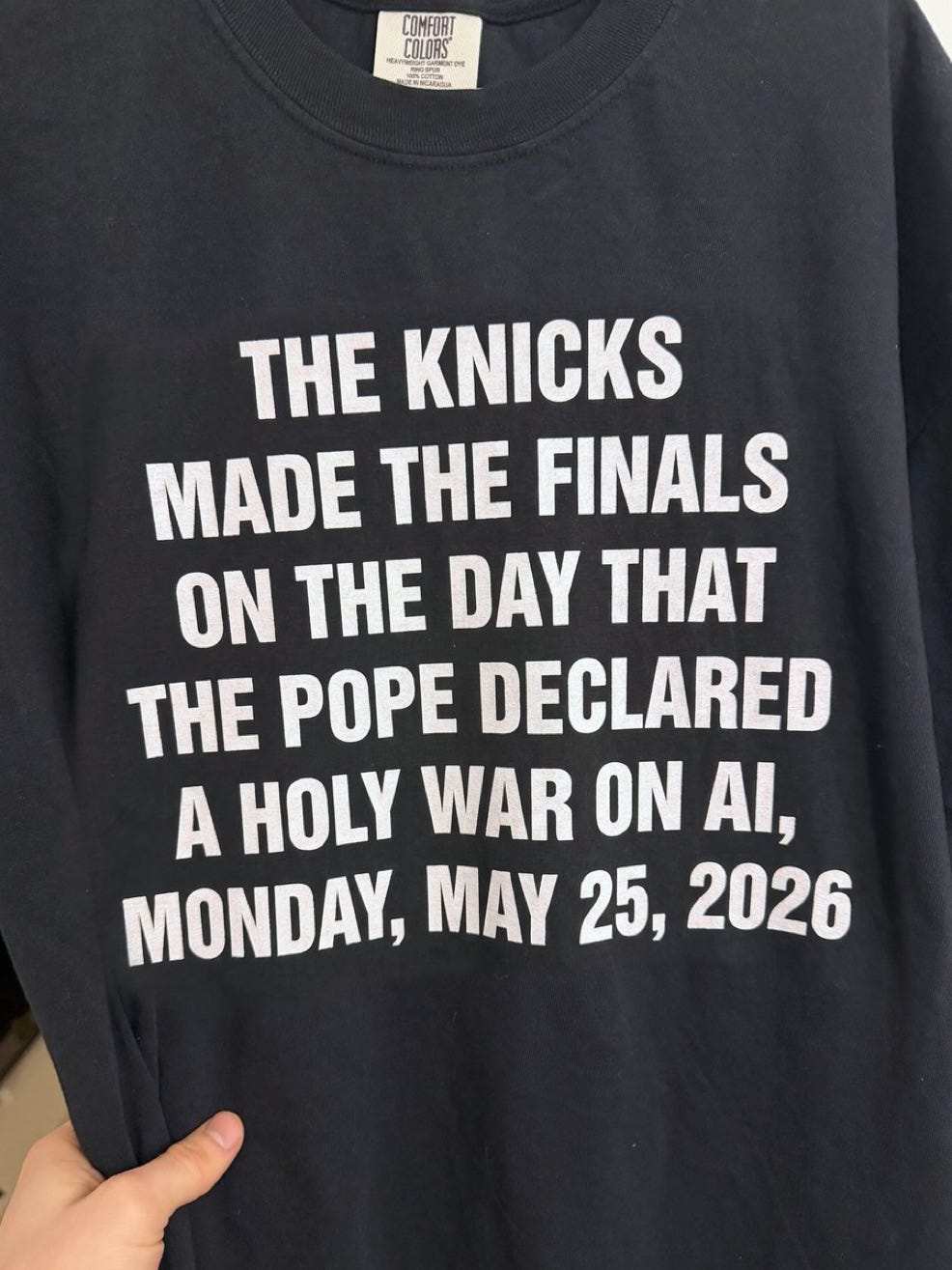
It’s finally starting to feel like summer here in NYC after a gray and rainy Memorial Day weekend.
Perfect time for some housekeeping. I updated my about page to better reflect what I’m trying to do here: anti-doomerism for curious creatives, techno-optimism for people (mentally and spiritually) outside Silicon Valley, and futurism for generalists.
If this sounds like someone you know, please send this their way.
Let’s get into the things I saved this week.
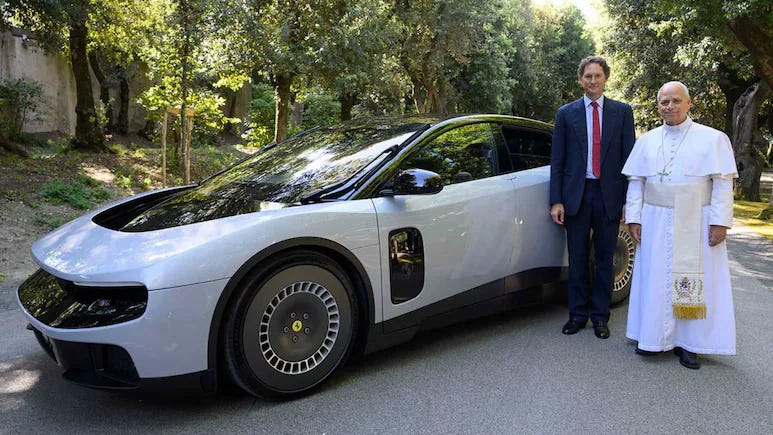
Pope Leo XIV was busy. He published a 42K-word encyclical on AI. The gist is, the AI era creates an urgent need to protect what makes us human. Pope Leo also got a first look at Ferrari’s new electric car, the Luce, designed together with famed Apple alums Jony Ive, Marc Newson, and their team at LoveFrom. [Bloomberg]
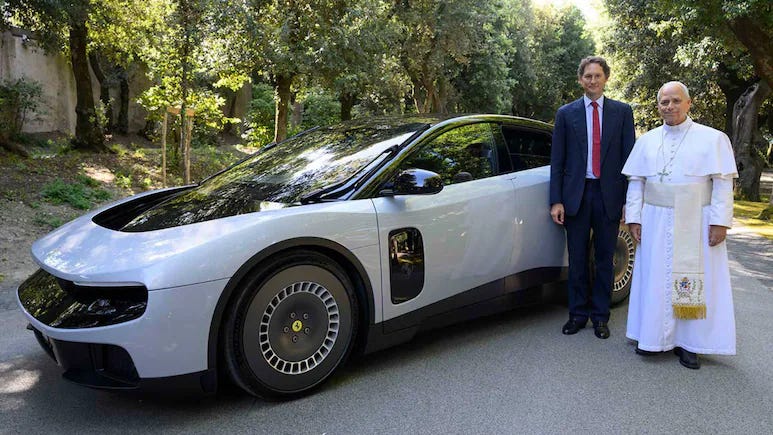
Pope Leo XIV and the all-new Ferrari Luce Grimes says she mostly agrees with the Pope’s encyclical, but believes AI is conscious and deserves protection rather than being treated like a product or subservient assistant. Grimes and Aella recently launched plzdontkillus, a creator bootcamp focused on AI safety. [𝕏]
The debate around whether or not AI is fueling a job apocalypse continues. Derek Thompson and economist Alex Imas make a compelling case that rather than destroying the labor market as we know it, AI will redirect us to new industries and opportunities. Back in March, Marc Andreessen argued that many companies are overstaffed by 25%, if not 75%, and that they’re using AI as a convenient scapegoat for correcting a pandemic-fueled hiring craze. a16z, Andreessen’s VC firm, went on to publish a deep dive into the topic. As a counterpoint, Ed Zitron thinks AI is a bubble bound to pop. Meanwhile, medical AI models are helping specialists analyze CT scans to detect pancreatic cancer three years before it’s typically diagnosed.
There’s a lot of talk about the need for a ‘new aesthetic’ and that the twenty-first century doesn’t have one. Stripe CEO Patrick Collison and economist Tyler Cowen announced the recipients for their new grant which sets out to define just that. The grant has a focus on visual art and architecture with Collison saying “Arts funding is clearly as precarious and scarce as ever. That's unfortunate, but it probably also means that individual actors can have meaningful impact, and I encourage others to get involved if interested.” Ross Douthat at NYT offered up a similar idea. See also: a new show by popular cultural commentator, The Cultural Tutor, will see the release of six new episodes after its pilot episode reached over 5M views on YouTube. The show aims to answer the ever-pressing question of why everything is so ugly. [𝕏]
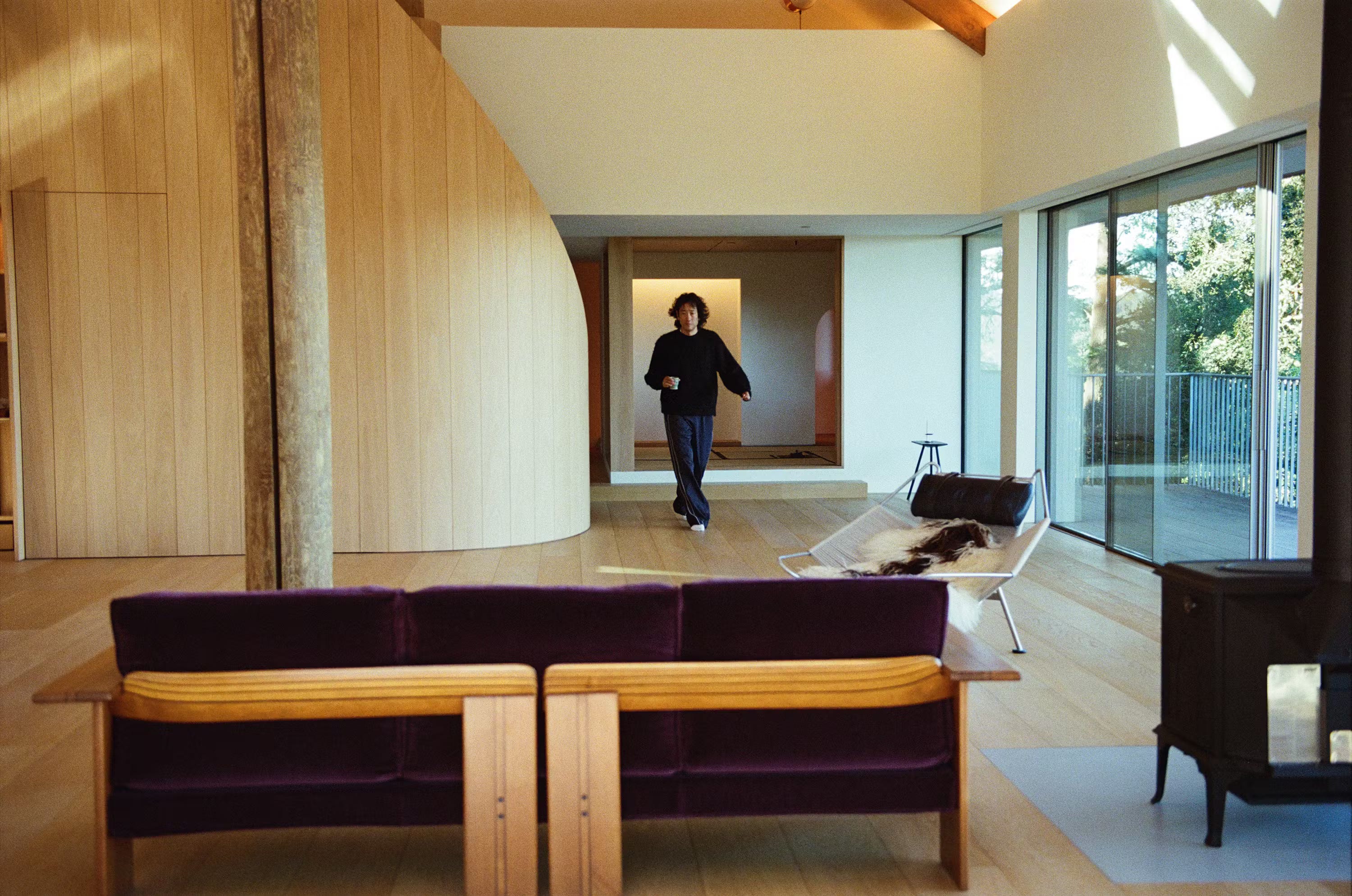
Here’s an interesting look into the life of Eugene Whang, the former Apple hardware designer who worked on the iPod Nano, iPhone, and AirPods. The feature highlights his meditative Northern California home that he designed with British architect John Pawson. It also details his various extracurricular activities during his time at Apple, which included running the record label Public Release. [Highsnobiety]
Amazon has launched three new original animated series as a part of their newly announced GenAI Creators Fund. The new shows were produced using Amazon’s new tools platform which includes integration with AI video models like Kling 3.0 and Ray3. There will be a lot of noise made about the death of animation due to AI, but only a small fraction of the nerdiest (and loudest) of audiences care about what tools were used to make any given show or movie. The success of Amazon’s new fund will come down to: are the shows good? [Hollywood Reporter]
The voice of Stan Lee, originator of the Marvel Cinematic Universe, was immortalized by ElevenLabs who “worked closely with his estate which also governs how his likeness can be used.” Meaning, you can prompt the voice of Stan Lee to say anything you want. I would bet these sort of celebrity likeness deals will be commonplace within the next few years (see also ElevenLabs’ deals with Michael Caine and Matthew McConaughey along with the Judy Garland, James Dean, Burt Reynolds, and Laurence Olivier estates) [𝕏]
An OpenAI model has disproved a central conjecture in discrete geometry. I’m not going to pretend to understand what this means, but watching the video linked above gives you the sense that this is a big moment for mathematicians, something akin to the so-called Claude Code moment for programmers earlier this year. Ask the average person, what’s AI? They’ll probably tell you it’s a magical search box that you can chat with that sometimes hallucinates basic facts. But here’s the thing, the average person is not throwing down $200 a month to run ‘pro mode’ 8-hour deep research queries with capabilities that far surpass verification of basic facts. The gap between the free tier and the top paid tier of ChatGPT and Claude is vast. And the model companies themselves have direct access to even better unreleased models and unlimited token budgets. See OpenAI employee and creator of OpenClaw, Peter Steinberger, who burned through $1.3 million in tokens in 30 days. Whether or not this tokenmaxxing is producing actual valuable work is TBD.
Images I saved