Good morning. There was a lot of news out of Hollywood this week. How did a movie made by an unknown 20-year-old come close to beating out Star Wars on its opening weekend? And why is an 83-year-old director embracing generative AI while others in the industry reject it?
Here are the things I saved:
Economist Tyler Cowen gave a refreshing 19-minute talk at the Sana AI Summit about the future of work and the economy. He says “AI will not bring mass unemployment, but it will change most jobs.” As Cowen describes, we are in the midst of a radical technological revolution. People may not like the change and uncertainty that comes with such a revolution, but as Kevin Kelly recently suggested, the most important skill for thriving in this new era just might be the ability to navigate and even become comfortable with ambiguity.
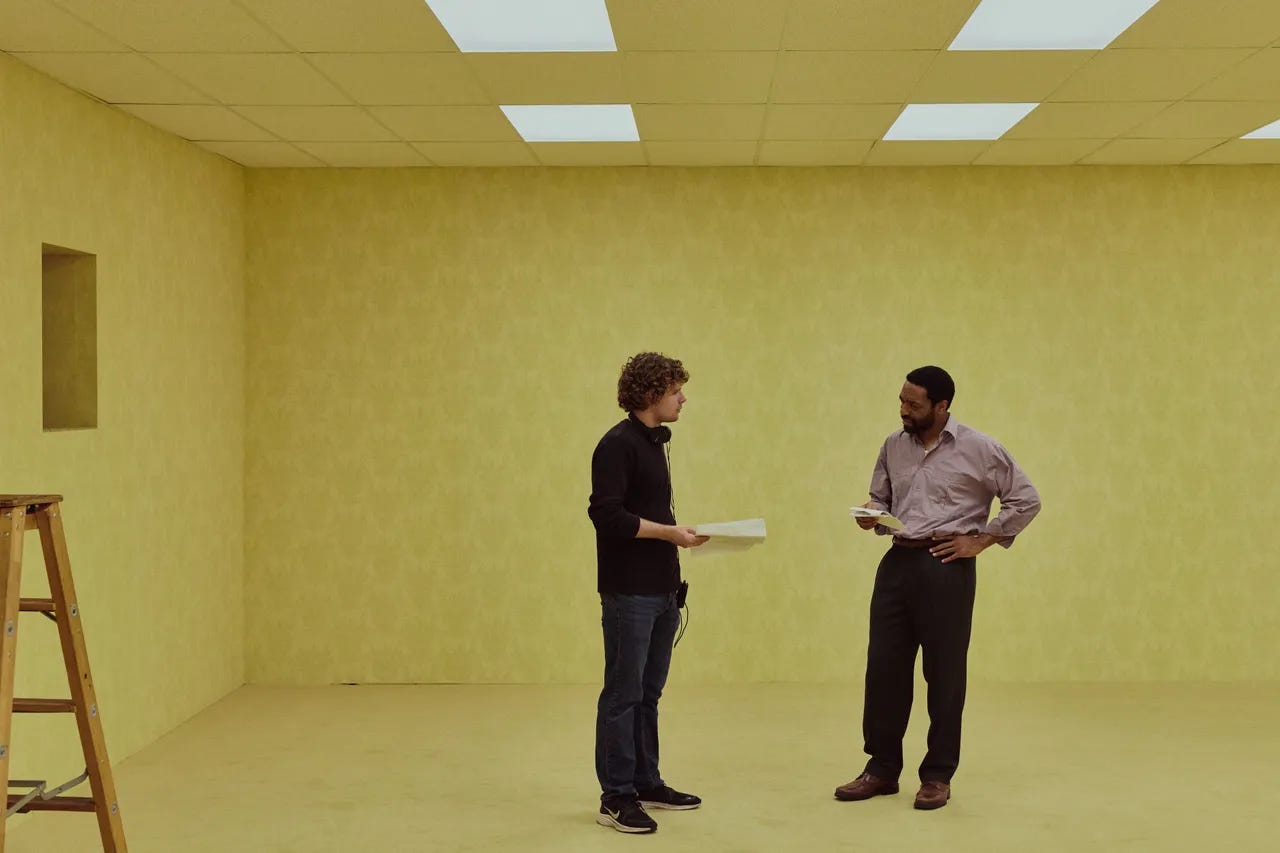
Is the movie business thriving again? AMC recorded its highest attendance for the month of May since 2019. This was, in part, due to the late-month success of two relatively low-budget horror movies by two young directors who got their start on YouTube: Obsession and Backrooms. [The Hollywood Reporter]
Analyst M.G. Siegler argues this signals the beginning of the end of the traditional Hollywood model: “Tidal waves are forming. YouTube is just the first.” Siegler believes that in order for Hollywood to survive, it must experiment with new distribution models including manufacturing exclusivity, like limiting theater releases to one-week windows for example. The disruption of Hollywood has been brewing for quite some time. In 2024 director Harmony Korine said “this idea of conventional films is ending” and that “what’s happening in Hollywood — and you’re starting to see Hollywood, I think, crumble creatively — is that they’re losing a lot of the most talented and creative minds to gaming and to streamers. Like IShowSpeed is a movie, Kai Cenat is a movie.”
The next big ‘tidal wave’ for Hollywood is obviously AI. YouTube enabled anyone with a camera and an internet connection to distribute video worldwide. AI is bound to disrupt the creative and production side of things. Justine Moore shared some compelling takeaways from AI on the Lot, a conference that took place last week and included attendees from the tech industry along with Hollywood execs and creatives. Her assessment of the overall vibe of the conference is worth quoting in full: “There was far less fear and negativity than I expected. There's a large and vocal online contingent that hates AI, and if you only listened to them, you'd assume the entire industry felt the same. The people I spoke with mostly didn't. They feel the cost structure of traditional Hollywood has capped their ambition for years, and they see AI as a way to try new things, get more projects funded, and pull production back onshore.”
Last Friday I touched on Amazon’s new AI animation initiative which includes announcements of three animated series to be created with Amazon’s generative AI tools platform. Shortly after the announcement, one of the directors, Jorge Gutierrez, dropped out of the initiative after facing pressure from his followers on social media. Many of the detractors included traditional Hollywood animators who have rallied around the hashtag #StandWithAnimation. [The Hollywood Reporter]
20-year-old Backrooms director Kane Parsons had this to say about the use of generative AI in movies in a recent interview: “I think I’m in the same boat as most well-adjusted people. If I could snap my fingers and make generative AI disappear forever, I probably would.” Parsons notably used the 3D modeling software Blender to create his original Backrooms YouTube videos in 2022. Some may take this as a sign of more widespread rejection of AI among new directors, but I’m not convinced. One poster on 𝕏 put it this way, “Everyone hates the thing that comes after. To him Blender is just as sacred as filmstock is to Nolan.”
Meanwhile, Martin Scorsese has joined the ‘visual intelligence’ i.e. AI video research lab Black Forest Labs as an advisor. In a video announcing the partnership, Scorsese comments that the challenge with making movies has always been how do you take what’s in your mind’s eye, communicate that through limited verbal language to a crew, and translate that to moving images on a screen? Scorsese sees the potential for ‘cinematic intelligence’ tools to collapse this translation process, ultimately allowing for more expressive and creative possibilities. [Black Forest Labs]
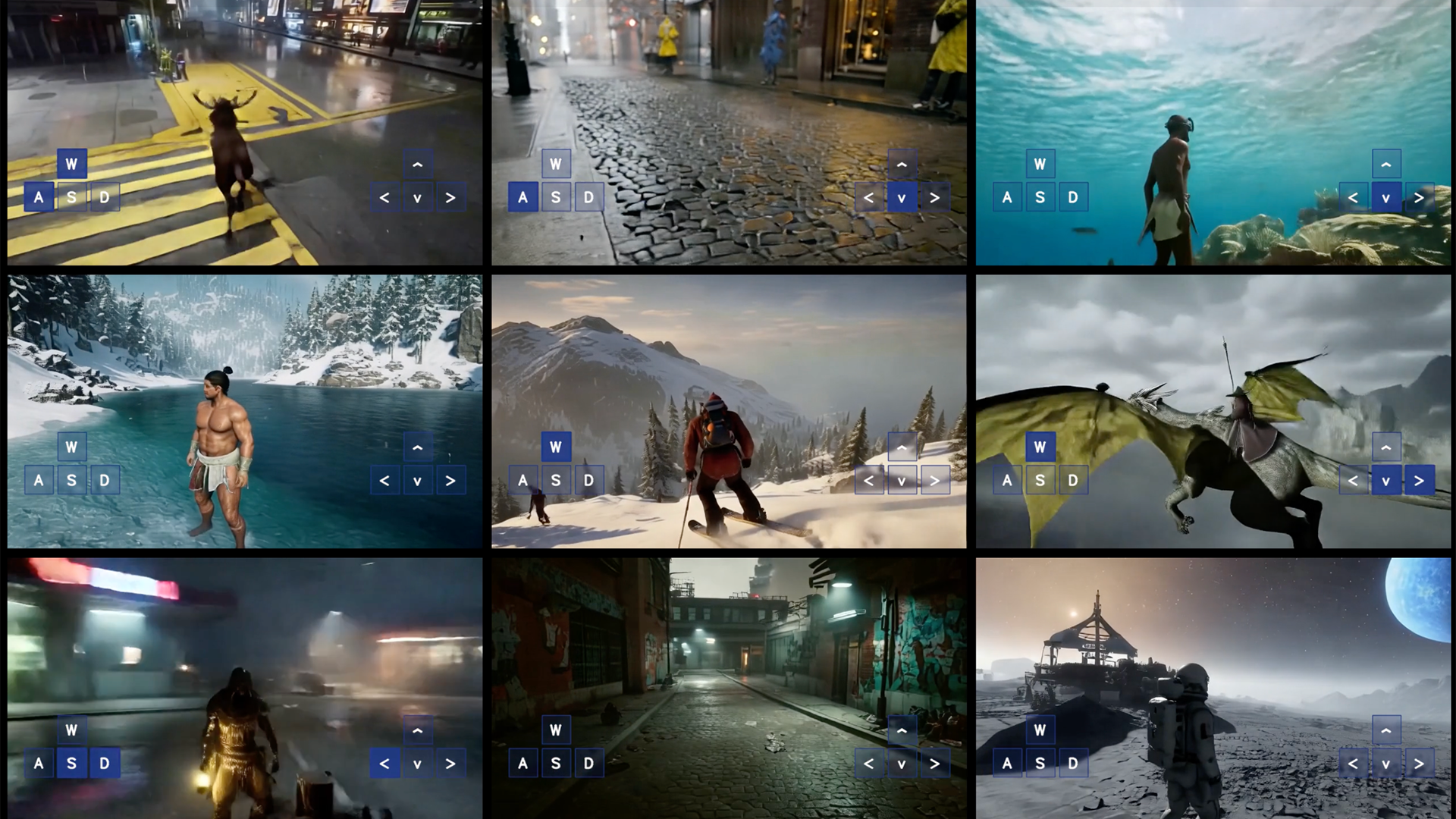
Roblox acquired the video world model company Morpheus AI describing it as “a strategic step toward advancing the Roblox Reality vision.” While Roblox is best known for its blocky, childish aesthetic, it is barreling toward future generative AI rendering capabilities that may rival photorealistic AAA games. So called ‘world models’ are increasingly seen as the next frontier for advanced AI, expect to hear a lot more about them in the coming years. World Labs founder Fei Fei Li’s recent post A Functional Taxonomy of World Models is a useful primer on this.

Images I saved