

Good morning. The rules of the feed are strange and ever-shifting. YouTube is pushing faceless creators toward real faces, AI-generated mini dramas are gaining popularity on Douyin in China, and Sephora metrics offer a useful reminder about how desire is crafted.
Let’s get into it…
YouTube is deprioritizing AI-generated content from faceless creators. Keeping up with the shifting trends and platform responses to AI-generated video content is feeling more and more like a full-time job these days. As The Hollywood Reporter details, the landscape is shifting rapidly—the emergence of text-to-video tools like Higgsfield AI has enabled a whole host of creators to find success in publishing “faceless” content on YouTube and other platforms. One creator featured in the article runs six different faceless YouTube channels, churning out AI-generated content for each of them daily. But YouTube has recently altered its algorithm to prioritize content that features real faces from creators. Some of the faceless creators have responded by hiring people off of Fiverr or Upwork to sit in as the real-life host for their channels.
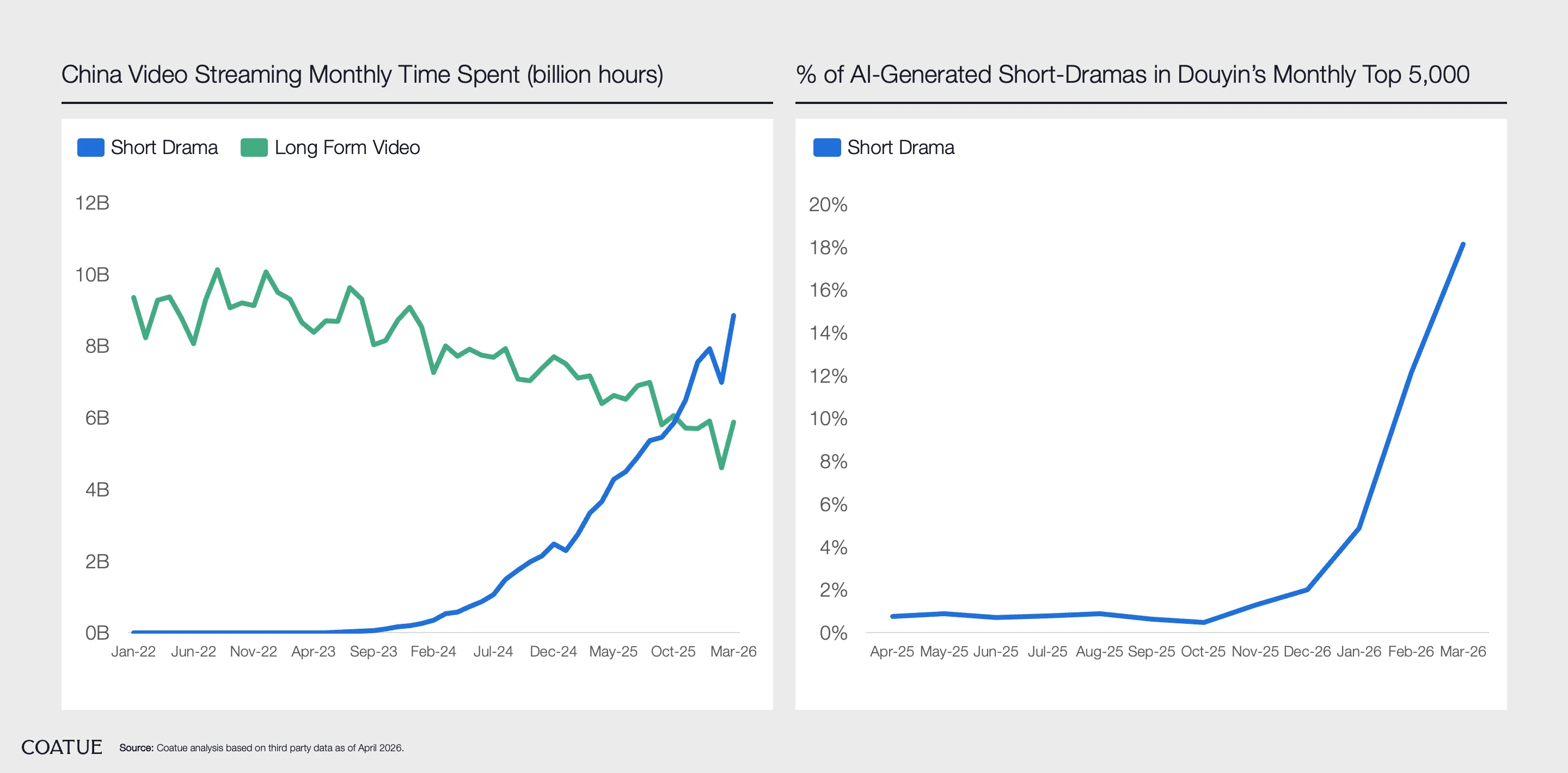
AI-generated “mini dramas” are gaining popularity in China. Mini dramas are made up of 100 to 200 short episodes, each just one to two minutes long, and are created specifically for Douyin, TikTok’s Chinese counterpart. According to VC firm Coatue, one in four of the top mini dramas on Douyin is AI-generated. One precursor to mini dramas can be seen in the many TikTok accounts dedicated to cutting up entire movies and TV series into hundreds of short clips. Dazed ran a feature on this in 2023 saying: “One account, with over 11,000 followers, has painstakingly uploaded nearly 300 clips of Emily in Paris. Another is dedicated to posting clips from the second season of The White Lotus, with the first scene alone racking up over 311,000 views.”
SoundCloud founder Eric Quidenus-Wahlforss announced his mysterious new company Nell. The company seems to be building an AI-native, remixable short-form video platform, based on the limited information available on its website (perhaps their own take on the mini drama format?) In his announcement on 𝕏, Quidenus-Wahlforss said “Every generation inherits a new medium. Ours is taking shape.” SoundCloud continues to have a lasting impact on music. It has been home to countless scenes and permutations of internet-native “underground” music. For the past 20 years it’s been the primary platform where truly “new” music can be found—what other platform has had a genre named after it? So if SoundCloud’s cultural importance is any indicator, Nell might be worth paying attention to.
Lionsgate has taken an equity stake in the generative AI video company Runway. Everyone is vying for attention on short-form video platforms, including Hollywood. Lionsgate, which saw recent major success with the release of its Michael Jackson biopic, is expanding its partnership with Runway, first announced in 2024. The two shared plans to generate a specially created short-form video series pulling from Lionsgate’s existing IP. Related: Netflix recently denied rumors that it was interested in acquiring Lionsgate, after backing out of its attempted Warner Bros. acquisition.
In other notable news: Fox acquired the ad-supported streaming platform Roku for $25 billion. SpaceX went public and acquired Anysphere, the parent company behind the agentic coding tool Cursor. In its inaugural conference this week, Cursor announced development of its own frontier AI model that will rival the latest models from Anthropic and OpenAI. Cursor also announced Origin, a version control platform positioned as a GitHub competitor.
Epic Games outlines its plan for the next generation of Unreal Engine. The company behind Fortnite is preparing a major upgrade to its game engine that will feature deeper integration with agentic coding tools like Codex and Claude Code via an MCP. Unreal Engine 6 has been years in the making—Epic Games is betting on their new programming language Verse, which was first announced in 2020, and will replace their popular visual scripting system Blueprints. Blueprints certainly has a lot of fans, including the devs behind Clair Obscur, but because of its visual node-based nature, it’s not well suited for integration with AI coding tools. The full release of Unreal Engine 6 won’t be complete until sometime between late 2028 and early 2029. With how quickly the AI industry is moving, three years from now will feel like decades. And with competitors like Roblox betting on world models, it will be interesting to see if Epic’s longer-term strategy proves successful, or if it gets cannibalized by leaner game engine startups taking a world model-first approach to content generation and orchestration.
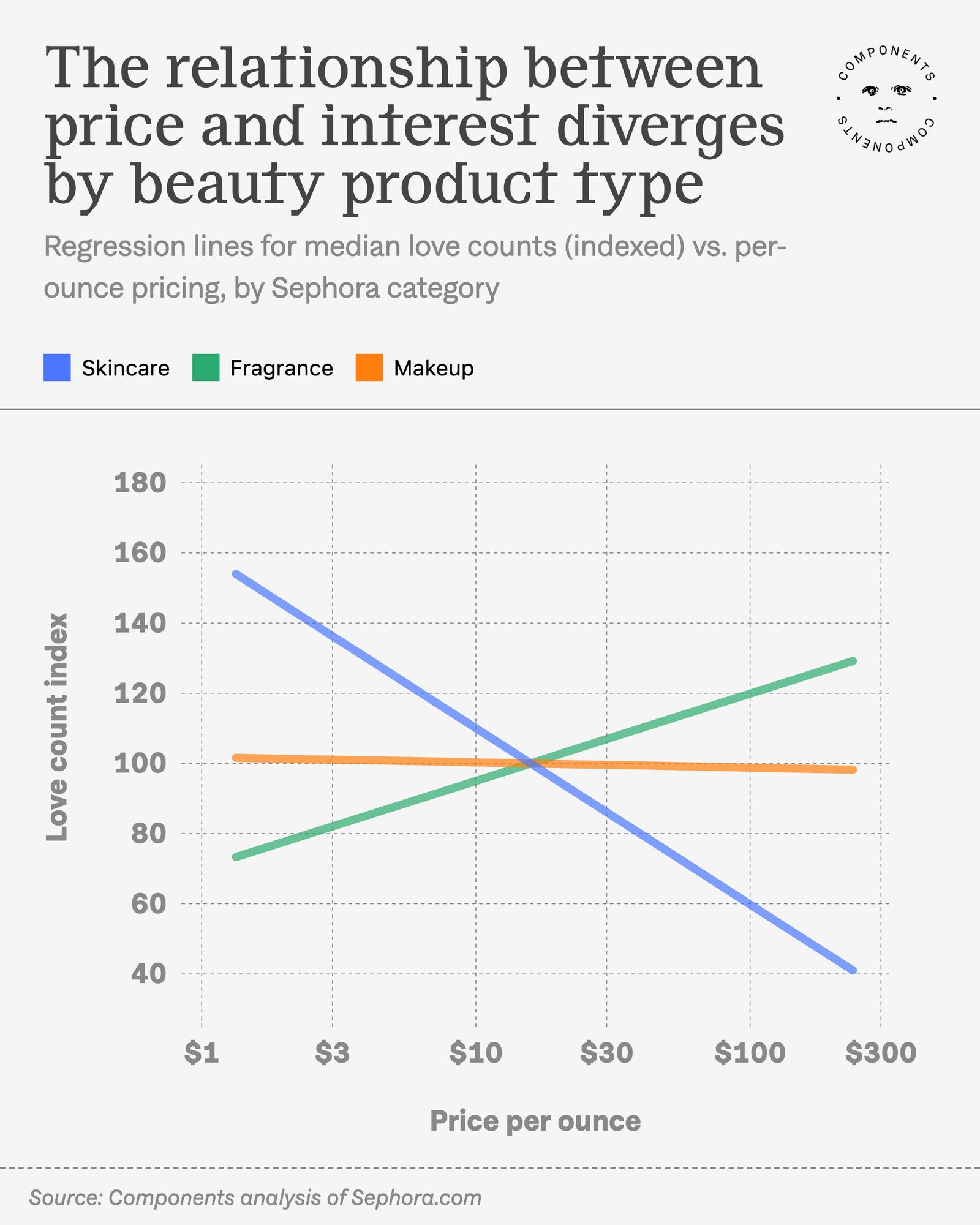
What can Sephora metrics teach us about product positioning? The newish media and analytics company Components offers compelling research applying Sephora product categories to broader consumer desires. They found that Sephora shoppers are more likely to love fragrance as the price increases, while more functional categories like skincare are treated more like commodities, with shoppers more likely to love them as the price decreases. As debates around taste in the AI age rage on, Components’ research is a reminder that products are not valued only by what they are, but by the desire they produce. Skincare and fragrance are materially not that far apart; both are chemicals in a bottle, but their pricing and positioning couldn’t be more different.
Images I Saved













This feels like the key distinction: a tool can make clips cheaply, but a mini drama still needs recurring characters, pacing, and a reason to return. I’ve been testing reference-guided generation in [Seedance 2.5 AI](https://seedance2-5.video/) for that kind of continuity; it’s a much more interesting constraint than simply churning out faceless loops.