Welcome to Things I Saved. Each week I share some links along with my thoughts on the platform shifts, strange incentives, and emerging formats shaping the future of technology, entertainment, and culture.
Good morning and happy belated GPT-5.6 release day to all who celebrate. This week: Some thoughts on accelerationism, Starbucks wants baristas to make branded TikToks, and researchers are generating videos designed to target specific regions of the brain. Let’s get into it.
I’ve been thinking a lot about accelerationism this week. Well, in some ways I’m always thinking about accelerationism. I would say it’s been the center of gravity in all my creative and professional work since I was a teenager, but this week in particular made me dust off the cobwebs and crack open Fanged Noumena again. Vincent Lê published an excellent essay in Aeon a few weeks ago detailing the history of the fractured philosophy that ultimately originates with Nick Land and CCRU, but which now spans the spectrum of far right and left-wing politics. Lê summarizes Land’s position: “Land’s vision that ‘nothing human makes it out of the near-future’ is for him something joyous. His unique commitment is not to humanity’s betterment, but to an absolute – if inhuman – knowing of the real.” Lê also published this book on Nick Land late last year. As Land explains in his 2018 essay, accelerationism is relevant as ever: “Anyone trying to work out what they think about accelerationism better do so quickly. That’s the nature of the thing. It was already caught up with trends that seemed too fast to track when it began to become self-aware, decades ago. It has picked up a lot of speed since then.” This week I also re-read Andy Beckett’s 2017 guardian article on accelerationism which pairs well with Lê’s essay.
A Plea for Art. Why do our feeds serve us slop? Freddie deBoer offers this: “The sad truth is that the machine only works because we wanted it. Nobody force-fed us the slop. We opened wide, our mouths or our legs, take your pick. As is generally true in life, the structural answers can explain but they can never illuminate, and the reality is that we ourselves told the entertainment industries what we wanted, and what we wanted was slop.” The algorithm is a revealed preference machine. The algorithm giveth and giveth and giveth. The reality is, if you don’t want slop, change your habits and engage differently with the feed.
Starbucks will send content ideas directly to baristas and pay them for viral videos. The job simulator isn’t just a game genre. Pretty much any job you can think of has an army of TikTok creators making content about doing said job. Some of them are “company approved,” but most are not. This is changing: as the Wall Street Journal covered last year, companies are hiring employees to create social-media content about life at work. Starbucks is the latest: “Starting this summer, the company says baristas can earn a direct cut of the ad revenue, as long as their videos are Starbucks approved.”
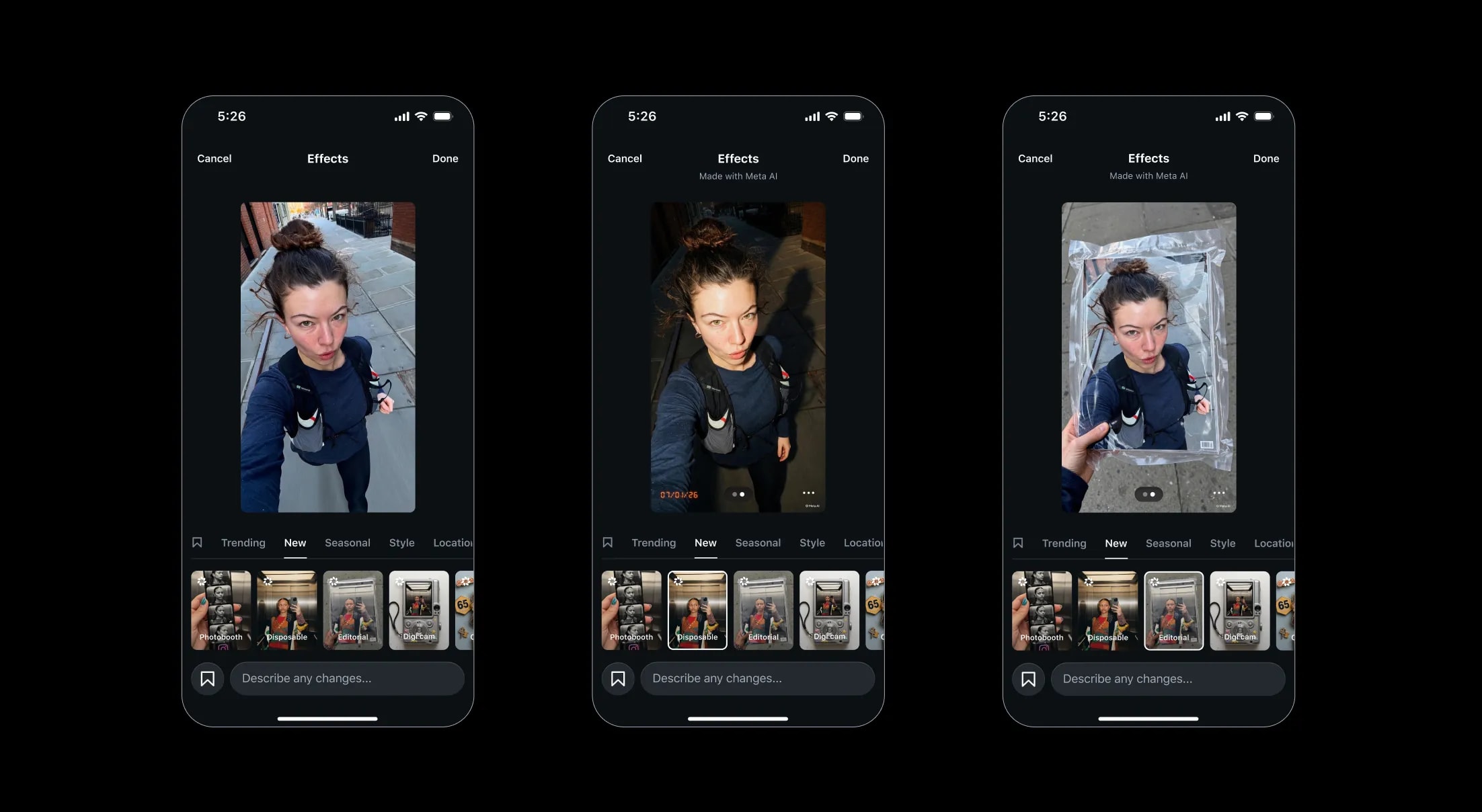
New research demonstrates method for generating videos that maximally excite arbitrary brain regions. Each one of the major social media platforms (this one included) has a posse of influencers who create content exclusively about how to make content that’s maximally engaging for that specific platform. From Instagram Reels that instruct which sound FX you should use to hook people, to YouTubers with tutorials on how to make eye-catching thumbnails that convert to views, to Substack newsletters about how to grow your subscribers list. You’ve gotta consume these how-tos, learn best practices, alter your creative process, implement the techniques, and iterate until you find success. A fair bit of manual labor. But not for long! Consume, learn, alter, implement, iterate…these are all things that frontier models like GPT-5.6 Sol are really, REALLY good at. Imagine a future where TikTok ingests your brain activity data in real time via your next gen Airpods which drive an AI video model that alters content on the fly for maximum engagement as you scroll the feed. Meta is not far off with its new AI effects features in Stories. Meta’s new AI effects allow creators to prompt Muse, their new AI image model, and drastically alter their content prior to posting (see example below). With a bit more compute or better on-device models, Meta could flip a switch on this feature—just upload your raw original content and sit back as it’s automatically edited and altered in real time, perfectly customized for the tastes and preferences of each unique set of eyes scrolling the feed.
The Fan Art Is More Interesting than the Canon. Artist Jon Rafman was interviewed in AnOther and shared his thoughts on the anti-AI discourse among other things: “There’s a fear of the new, and there’s a fetishisation of labour, especially in fine art and the film world. But ultimately AI is a tool, and you can use the tool for good and bad. You can use the tool to make great work and slop. I think it’s very important for artists to be in these new spaces, because that’s where the vitality is […] The streamer is the new celebrity – people thought the world was going to become more like MTV, but it actually became more like Andy Warhol videos, where you just look at somebody for hours and hours and hours, and these parasocial relationships take over. Maybe art is dead. Maybe we need new categories.”
Strategies for starting a successful YouTube channel. Tech YouTuber MKBHD and his team share some interesting thoughts about their strategy for making YouTube videos. They scour YouTube to find supply and demand imbalance in content. I particularly liked the segment on outlier theory vs trend theory.
Images I Saved